Applied Econometrics (Econometrics II)
Summer 2004, Lecturers: Lizal (room 3, ext. 114) Münich (room 331, ext. 175)
TA: Peter Tóth, Teodora Paligorova, Anu Kovaříková Arro
This course is a direct
sequel to Econometrics I. The objective of the course is to expose the
student to variety of common and practical econometric challenges with
the ultimate goal of gaining a stronger appreciation of strengths and
weaknesses of econometric methodology and to overview historical
developments in applied econometrics. The course assumes familiarity
with the general linear model and knowledge how to deal with basic
model and data deficiencies, simultaneous systems, and simple
time-series processes. The course will start developing theoretical
topics not covered in Econometrics I. The course will follow with
different empirical research projects drawn from the literature. Each
project will be introduced by the relevant economic theory-model. Using
own and empirical data sets, the students will apply standard
econometrics methods to answer basic economic questions. Exercise
sessions will provide introduction into advance use of statistical
packages TSP and Stata and a feedback on possible solutions of problem
sets. The course will also require intensive work with data and
statistical packages.
Prerequisites: Econometrics I or equivalent.
Requirements and grading: Evaluation is done
on the basis of problem sets and exams. The weights are 40% problem
sets, 25% midterm and 35% final exam. Getting Fail either from problem
sets or exams means automatically Fail of the course. The final grade
also reflects the overall assessment of the student’s work.
MIDTERM EXAM: Wednesday, June 2, 2004,
reguler place (room 302) at regular time (10.30 a.m.). Calculator will
be useful.
Principal texts:
B = Berndt, Econometrics: Classics and Contemporary, Addison Wesley Publishing Co., 1991
LR = Lott and Ray, Applied Econometrics, Orlando FL, The Dryden Press, 1992 (selected chapters).
S = Studenmund, Using Econometrics: A Practical
Guide, Addison Wesley Longman Inc., 2001.
W = Wooldridge, Jeffrey, Introductory Econometrics, 2nd ed.
Supplementary references:
TSP User's Guide and Reference, http://www.CERGE-EI.cz/external/tsp/tsp.htm.
Stata Reference Manual and Stata User’s Guide.
Greene, Econometrics Analysis, NY, Macmillan Publishing Company, 1993.
Kennedy, A Guide to Econometrics, Cambridge MA, MIT Press, 1992.
Maddala, Econometrics, NY, 1977.
Class Schedule and Readings:
Chapters, topics, and econometric problems focused on from the principal texts:
1)
basic regression and testing
2) variable choice, specification, and functional forms,
3) heteroskedasticity
4) autocorrelation,
5) dummy variables,
6) multicollinearity and distributer lags,
7) SUR,
8) simultaneous equations,
9) dichotomous choice,
10) errors in variables,
11) basics of panel data,
12) basics of limited dependent variables.
HW#1: deadline Thursday, May 27, 12:30 to Anu's mailbox. Late submission will result in a 10% reduction of points per day.
LR40
Unemployment in Malta (basic regression and
testing, specification search, information criteria), all problems
except 6 and 7. Data: A, B.
Sample Solution Guide for a Different Chapter
from LR:
Tasks:
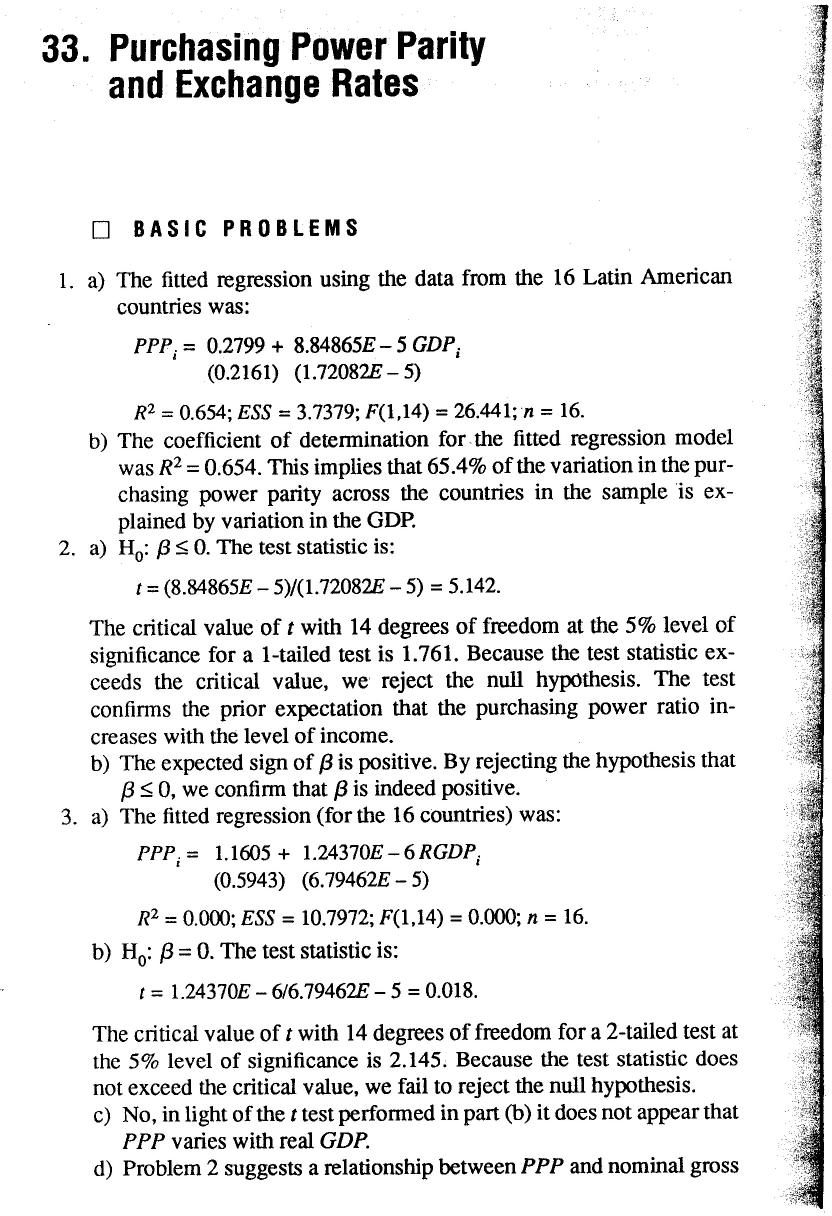
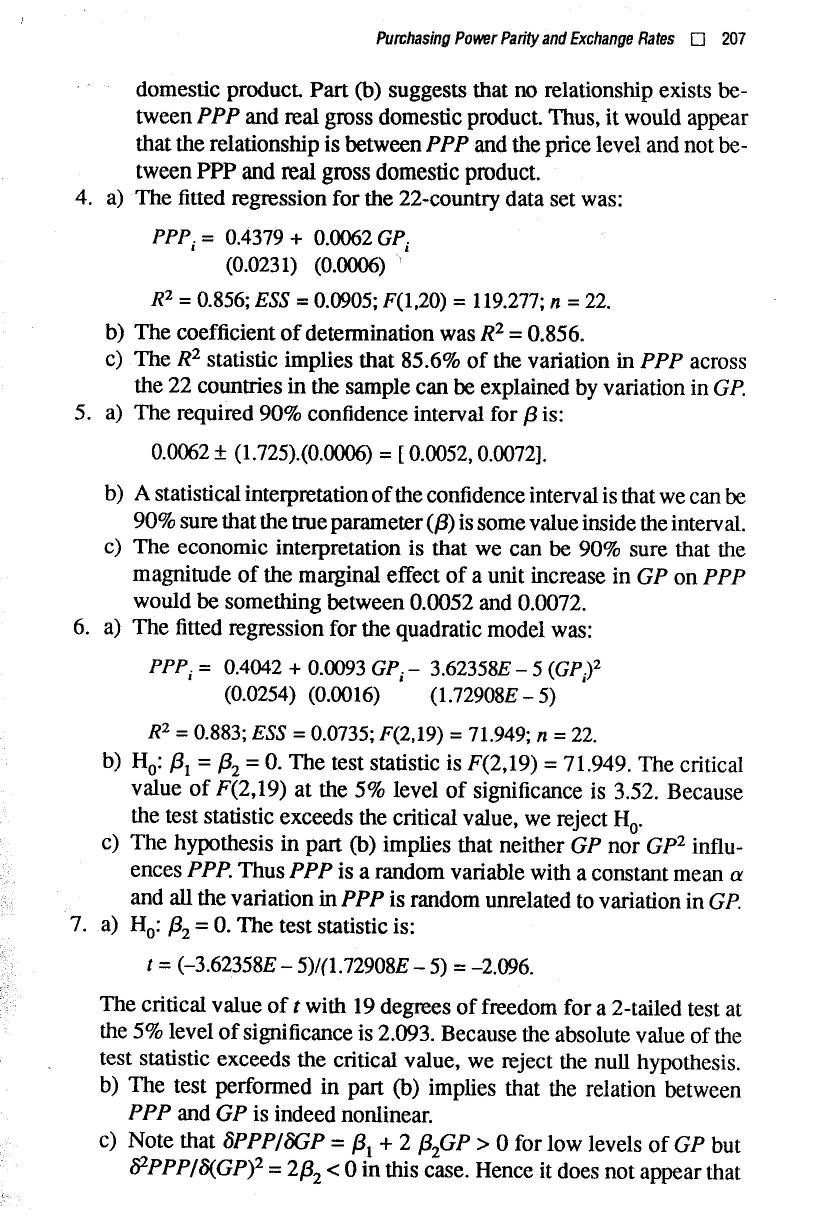
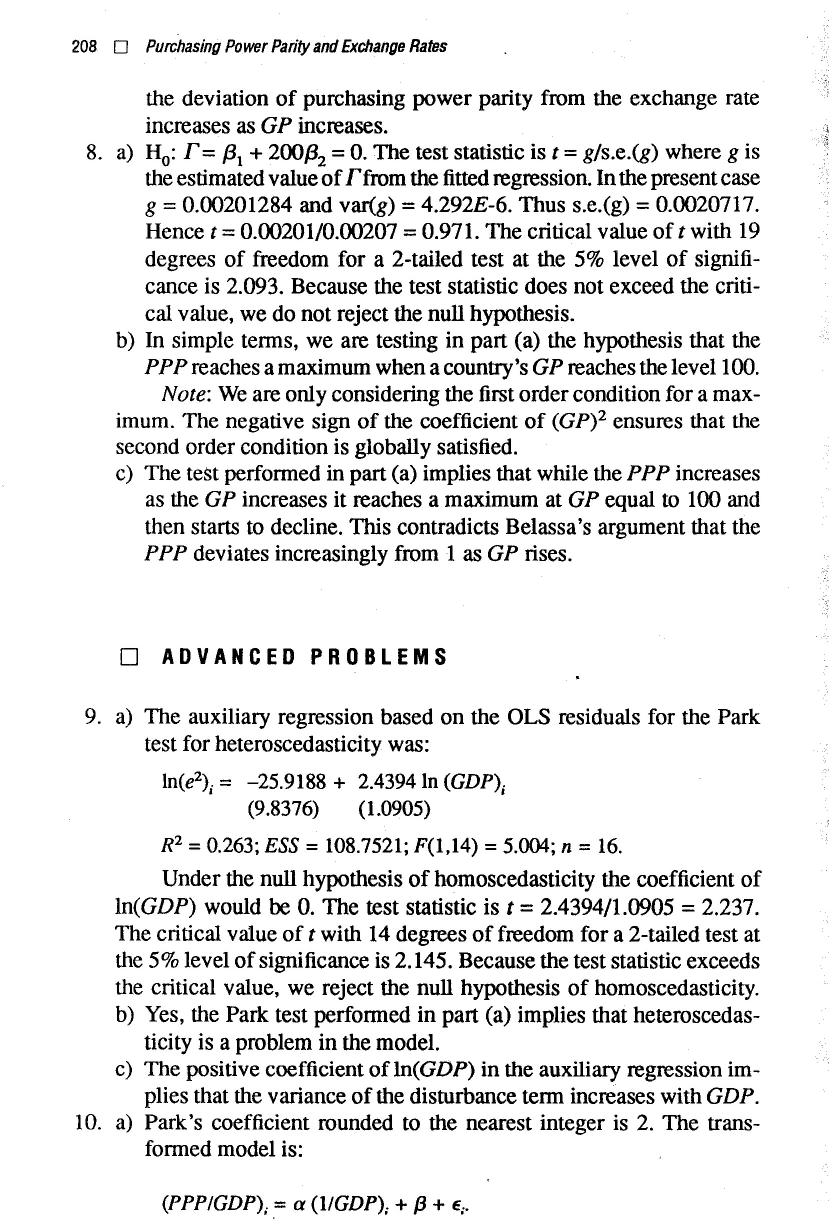
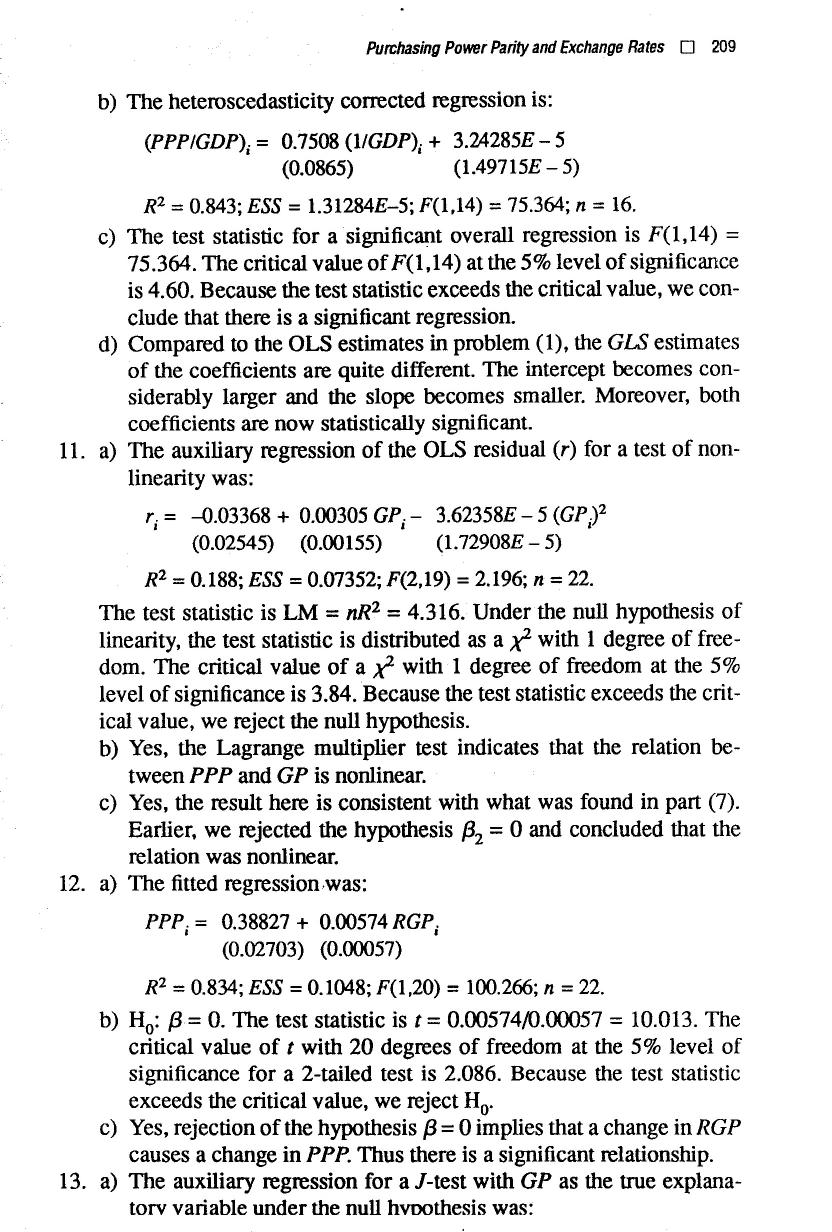
LR33
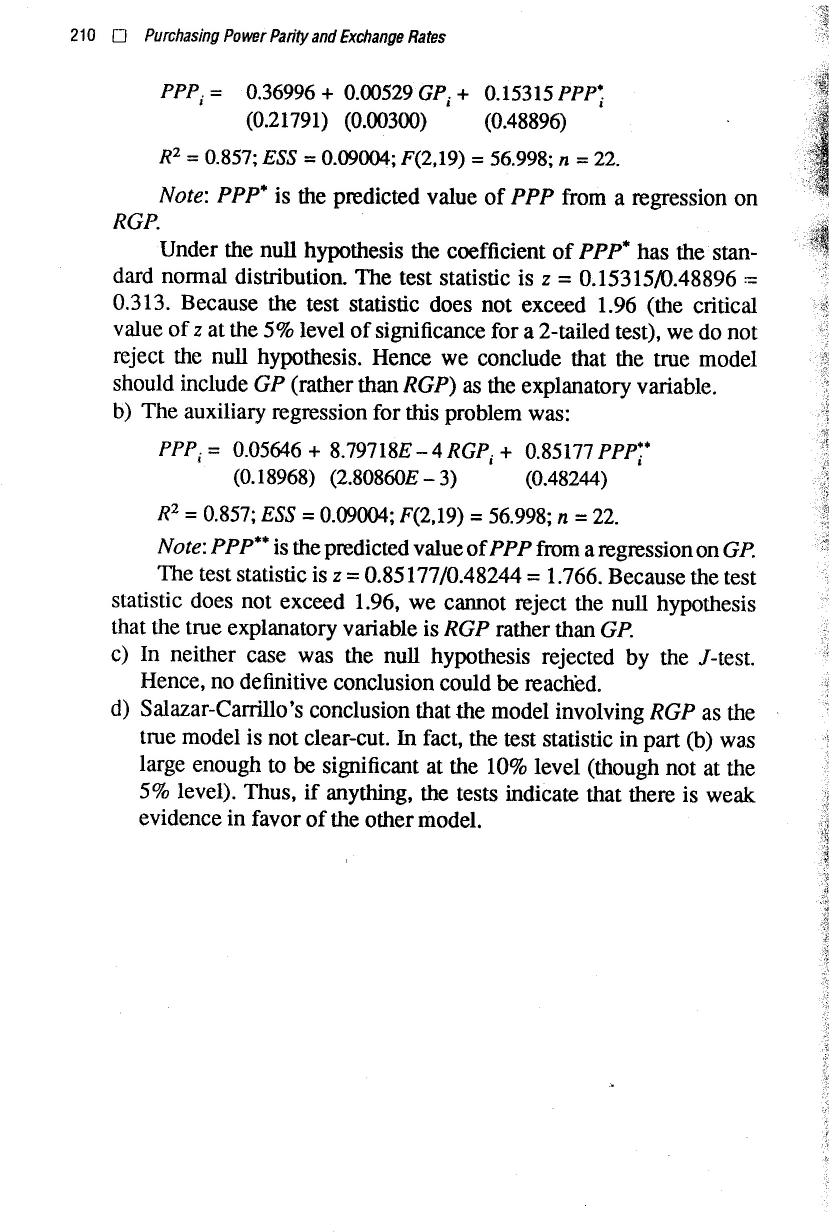
Purchasing Power Parity and Exchange Rates.
Data: 1A, 1B, 2A,
2B.
Solution Guide (check numerical results, there are [un]intentional
errors): Part1, Part2, Part3, Part4, Part5.
HW#2: deadline Monday, June 7, 12:30 to Anu's mailbox. Late submission will result in a 10% reduction of points per day.
"Information criteria and specification search" , all problems. Data: A, B.
You will be divided into groups by 2, randomly, and the groups will differ for each problem set. This schedule is only tentative.